- All
- Living
- Office
- Knowledge
- Health
- Publications
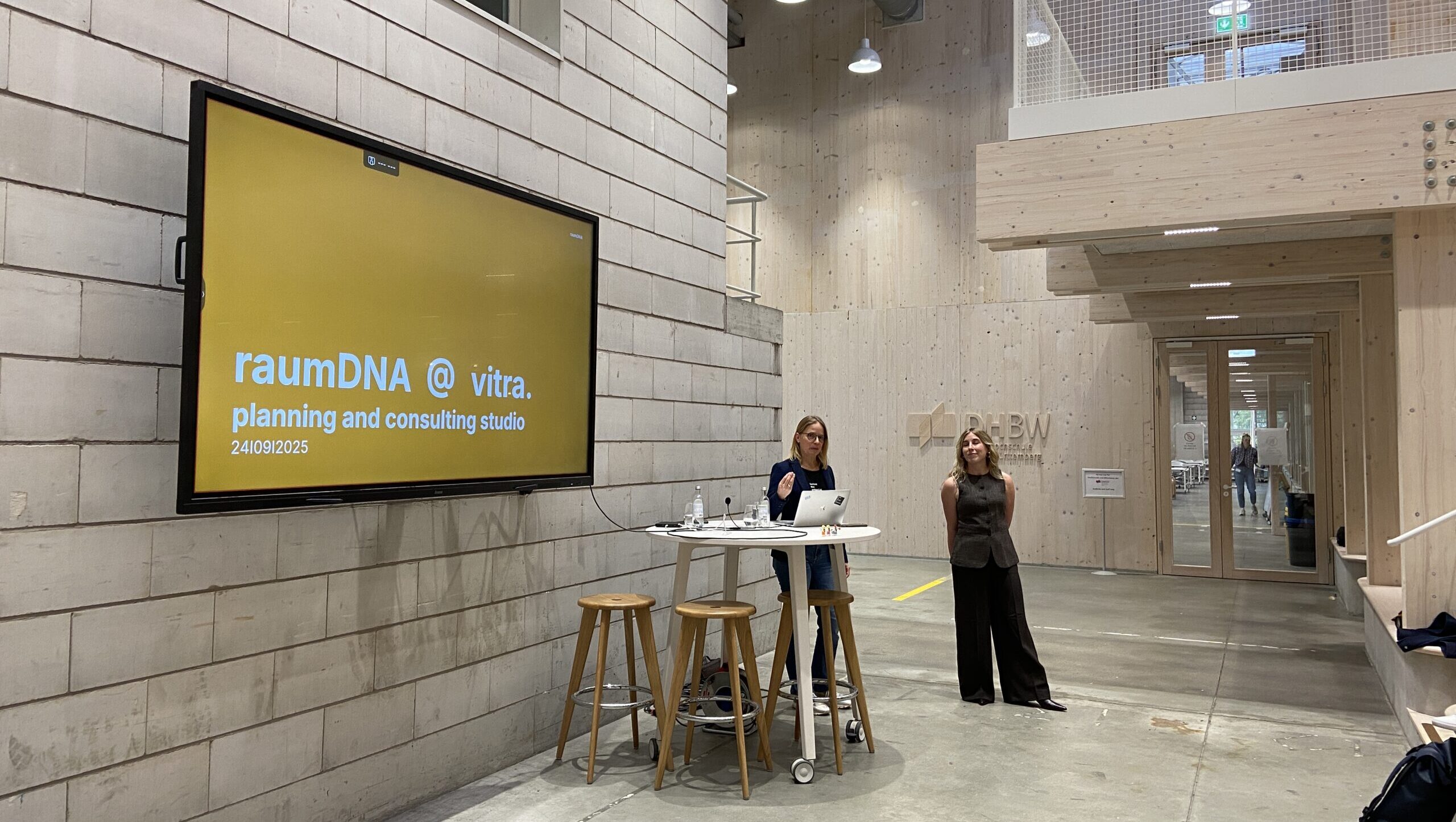
raumDNA @ VITRA
At the international team meeting of the vitra. Consulting and Planning Studio, we presented our working methods to the entire team. If a space has an effect on you, it’s no coincidence: we talked about how needs, perception, and the designed environment interact. A presentation and exchange between research and practice, head and gut. We agreed that the “why” behind design, its impact and effectiveness, are always part of the plan.
Architectural Profiling - Swiss Prime Site Solutions
What do hunters and gatherers have to do with architecture? Quite clearly, this is the result of a market strategy when raumDNA develops architecture specifically tailored to the needs of asset managers in Switzerland. PSN analysis, structural adjustments, clearly defined user groups.
Spaces That Think Human.
Unfold the Potential of Architecture – by understanding how spaces affect people.
Architectural psychology, neuroarchitecture – spaces often shape our experiences more than we realize. They can provide security or cause stress, encourage interaction or enable retreat. Anyone who designs or researches spaces always influences people’s behavior, mental health, and coexistence.
We see it as our task to spread knowledge far and wide so that architecture can unfold its full potential for people and society.
The PSN-based Architecture by raumDNA continuing education program combines psychology, sociology, and neuroscience with architecture, as well as human-centered and evidence-based design. It provides a deep understanding of the human-environment relationship and practical tools for evidence-based design.
We are delighted to be able to offer our continuing education program in an online format at Austria’s largest private training and continuing education institution in the field of clinical psychology and related disciplines.
More about the continuing education program:
https://www.aap-akademie.at/architekturpsychologie_neuroarchitektur/https://lnkd.in/eVZdudv3
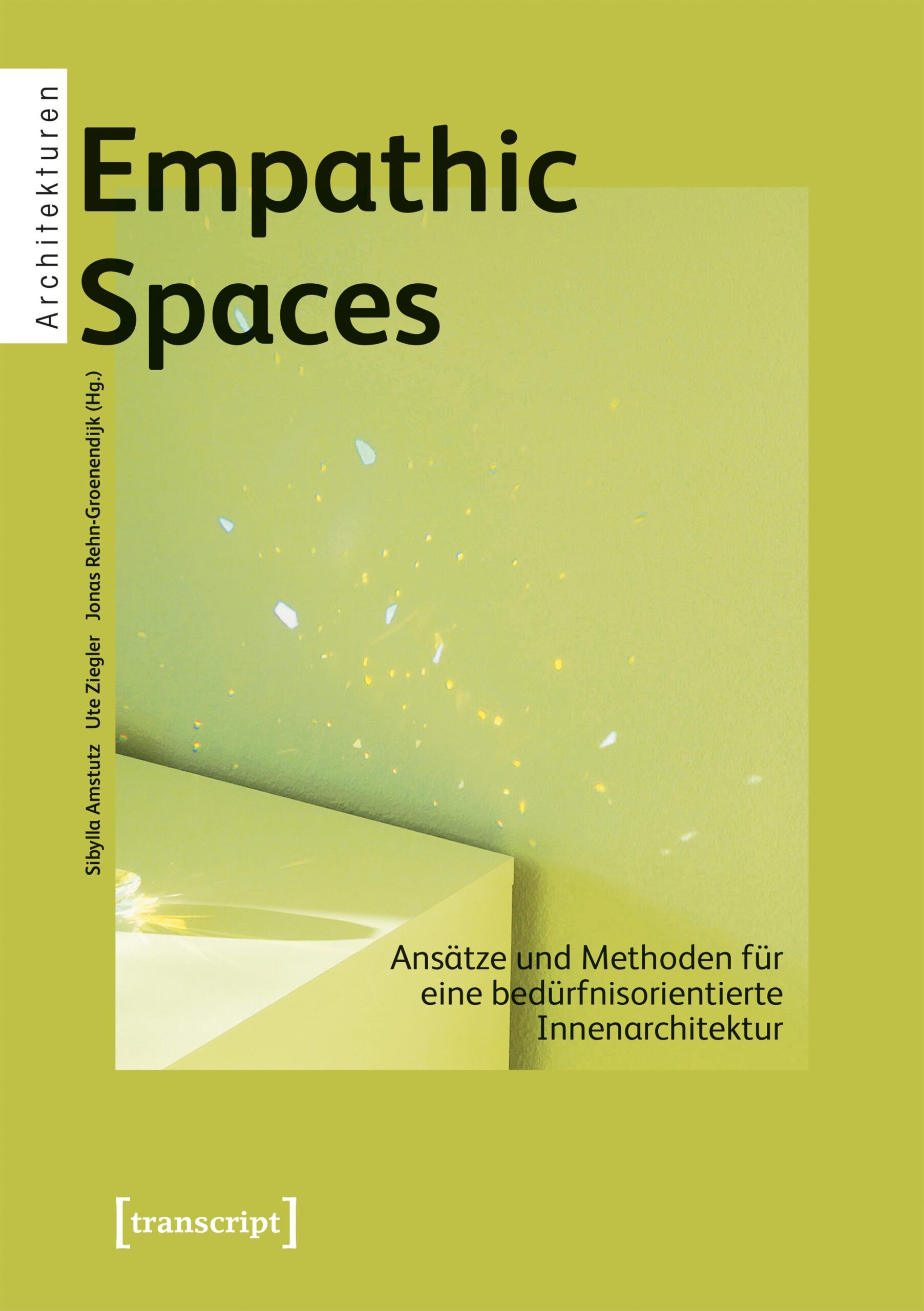
Empathic Spaces - Approaches and methods for needs oriented interior design
How can the role of needs orientation in interior design be strengthened? Contributors from academia and practice will show from various perspectives how evidence-based approaches, participatory methods, and interdisciplinary collaboration can be used to create interior spaces that promote the well-being of users. They will consider both theoretical principles and concrete examples of application, as well as practical tools and methods. The aim is to stimulate a comprehensive discourse and open up new avenues in needs-oriented planning—for interior design that puts people at the center and also provides impetus for other design disciplines.
Open access at:
https://www.transcript-verlag.de/detail/index/sArticle/7757
Third Places - More Than Just Spaces
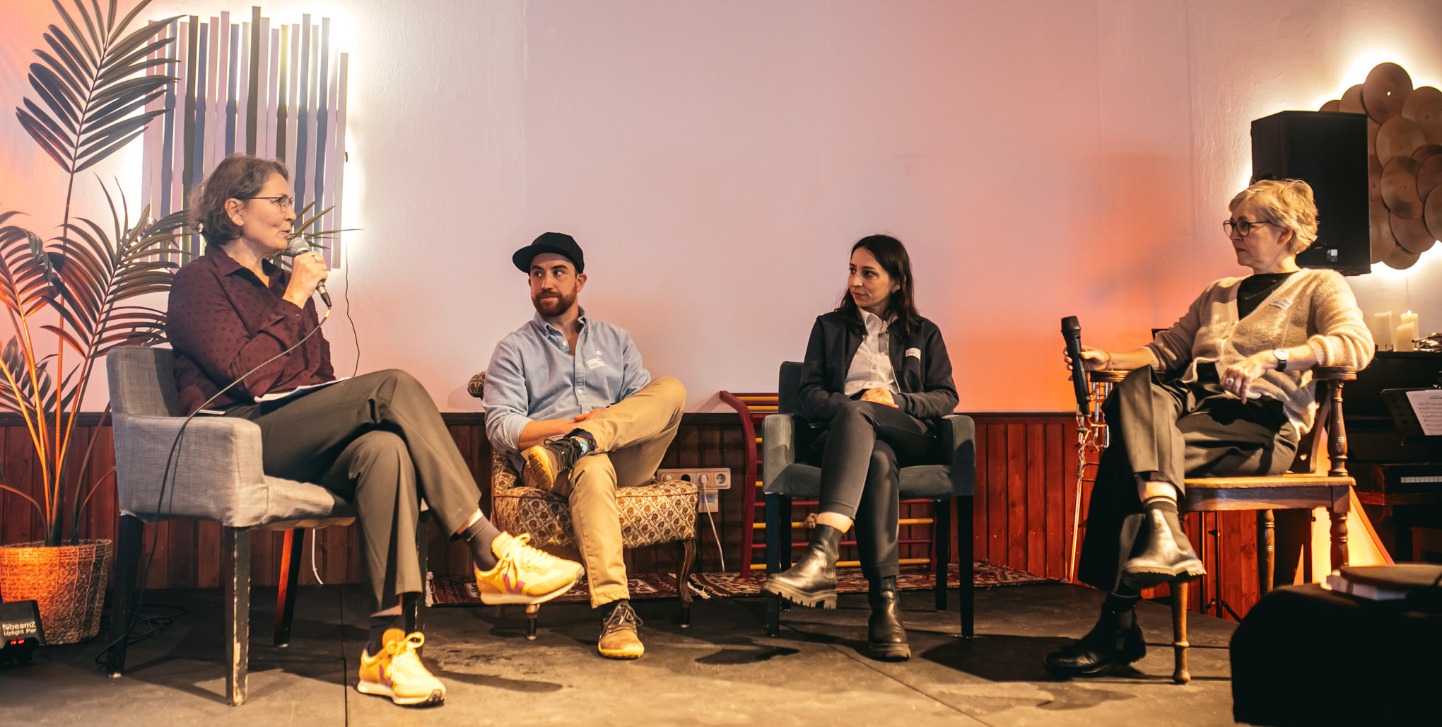
In North Rhine-Westphalia, the Ministry of Culture and Science specifically promotes projects that aim to strengthen cultural diversity and promote social cohesion, especially in rural areas. At the year-end event “Dritte Orte NRW” (Third Places NRW), we were invited by ProLoco to explain to project participants how spaces influence the behavior and well-being of their users and how evidence-based design helps to successfully create such places.
Studio G42 - Between the inside and outside
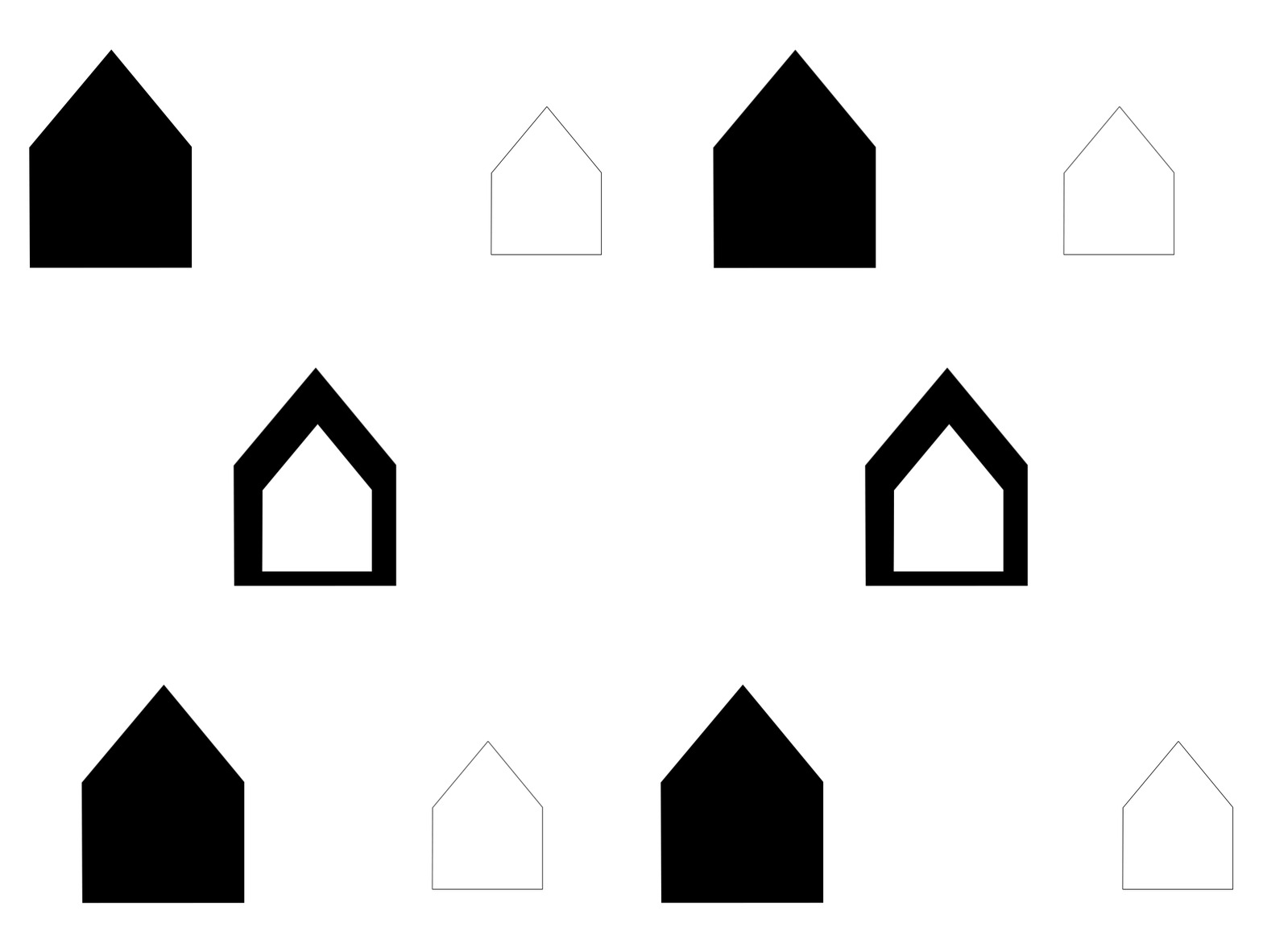
The Studio G42 project involved developing serviced apartments that are tailored precisely to the requirements of executive nomads. Based on the PSN criteria, a house-within-a-house concept was developed for the existing building, which both guarantees privacy and activates the space between inside and outside as a flexible living area.
This transitional space conveys a subtle connection to the outside world: it allows permeability without exposing users to social regulation or unwanted influences. The result is a spatial quality that intelligently combines seclusion and openness while reflecting the complexity of residential needs.
User profiling - Conversion of hotel into residential space
This project focused on transforming an existing hotel into high-quality condominiums. The starting point was precise user profiling and the development of tailor-made living concepts based on PSN criteria. This enabled the specific needs of future residents to be systematically recorded and translated into spatial strategies.
One of the biggest challenges was getting the right access: it had to be designed in a way that created a high quality of living without affecting the privacy of the residents. Through a differentiated spatial layout, we were able to clearly organize movement flows and ensure undisturbed retreat areas.
In addition, the communal areas were restructured and divided into active and passive zones.